Insurance for Mechanics: A Practical Guide for Shops and Mobile Technicians
Insurance for mechanics is not one-size-fits-all. Whether running a small garage in Bow, a mobile repair service that travels across Hooksett, or a busy shop in Concord, understanding the right mix of coverages can protect a business from lawsuits, costly repairs, and interruptions to operations.
This guide explains the specific risks mechanics face, lays out essential insurance types, and offers practical advice for shopping policies in New Hampshire. Written from the perspective of an independent insurance agent serving the capital region, it helps shop owners and technicians make confident decisions about protecting their livelihoods.
Why Mechanics Need Specialized Insurance
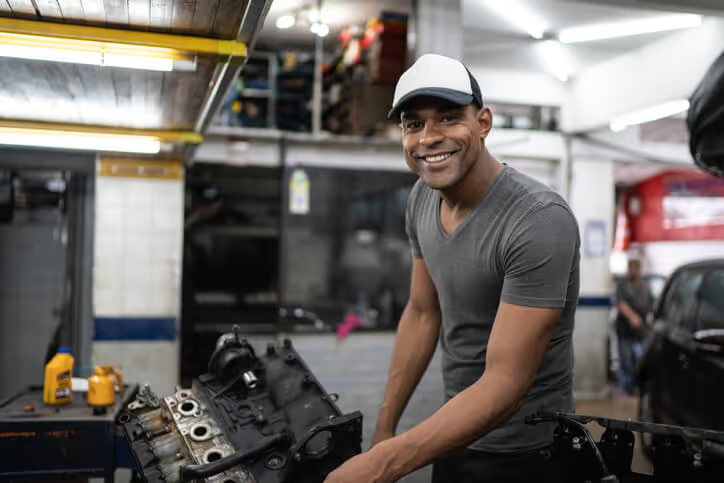
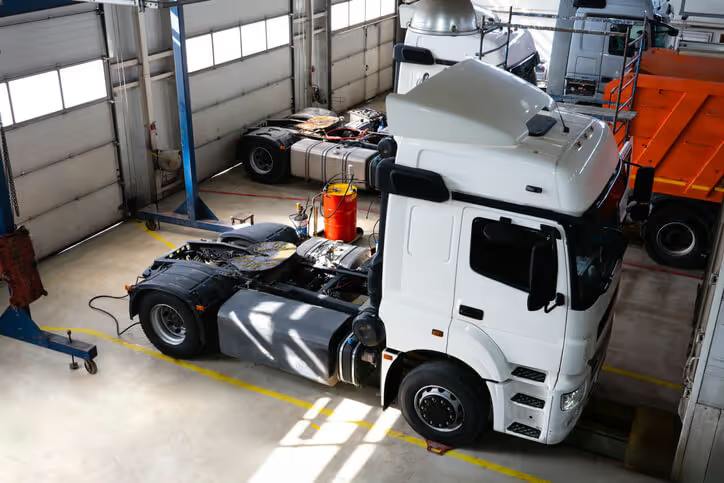
Automotive repair businesses handle customer property, expensive tools, vehicles, and hazardous materials. Those situations create exposures that a standard homeowner or personal auto policy will not cover. For example, a customer’s vehicle can be damaged while in the shop, an employee can be injured while lifting an engine, or a delivery van can be in an accident while carrying parts to a job site.
Specialized insurance for mechanics addresses these workplace realities with targeted coverages such as garagekeepers liability, garage liability, commercial auto, workers’ compensation, and tools and equipment protection. Without these protections, a single claim can threaten the business’s survival.
Core Coverages Mechanics Should Consider
Below are the foundational policies that most mechanics need. Each coverage has nuances that should be tailored to the shop size, services offered, and client mix.
- General Liability: Protects against third-party bodily injury and property damage. This is the first line of defense when customers or vendors are hurt on the premises.
- Garage Liability: A specialty form of general liability designed for businesses that service, repair, or store vehicles. It covers liability arising from garage operations that are unique to auto businesses.
- Garagekeepers Insurance: Covers customers’ vehicles while they are in the care, custody, or control of the shop. It can be written on a legal liability basis or on a direct primary basis.
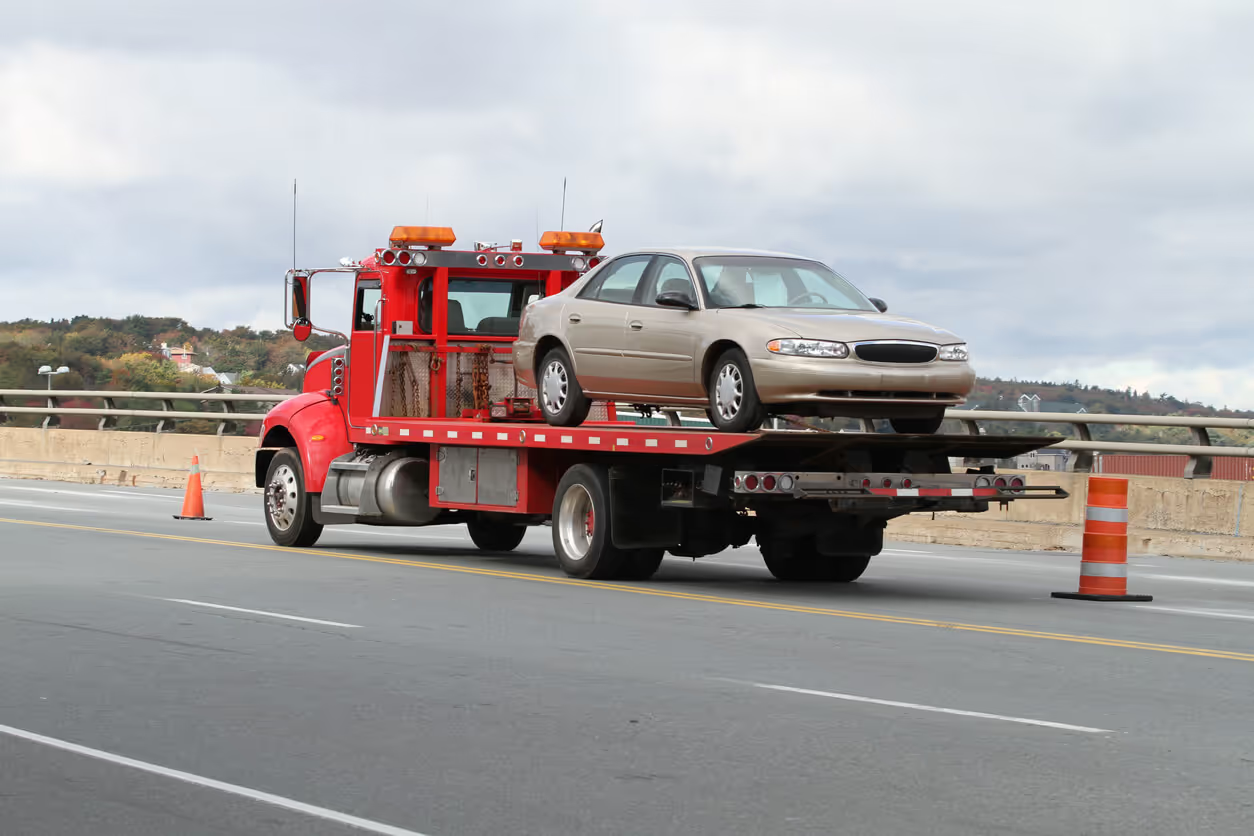
- Commercial Auto / Business Auto: Covers vehicles owned or operated by the business, including tow trucks, service vans, or pick-up trucks.
- Workers’ Compensation: Pays medical bills and lost wages for employees injured on the job, and it is required for most employers in New Hampshire. It also helps protect the business from employee lawsuits.
- Inland Marine / Tools and Equipment Coverage: Protects movable tools, lifts, diagnostic machines, and parts, both on the premises and often while in transit.
- Property Insurance: Covers the physical shop, equipment, and inventory against fire, theft, and weather-related damage.
- Umbrella or Excess Liability: Adds a higher layer of liability protection above primary policy limits for catastrophic claims.
- Cyber Liability: Useful for shops that store customer records, credit card data, or use connected diagnostic systems that could be targeted by attackers.
- Bonding: Certain jobs or contracts, including fleet maintenance agreements, may require bonds to guarantee service or financial responsibility.
Why Garagekeepers Is Different
Garagekeepers insurance is a distinct coverage because it responds to damage to customers’ vehicles while they are in the shop’s custody. If a vehicle is scratched while being moved, or a flood damages a stack of cars, garagekeepers should respond where general liability might not. There are two common forms of garagekeepers coverage:
- Legal Liability: Pays only if the shop is legally responsible for the damage. This is generally less costly but can leave gaps if liability is contested.
- Direct Primary: Pays regardless of whether the shop is legally liable. It functions more like first-party property coverage for customers’ cars and gives shops greater control over claims handling.
Contact Allied Insurance Agency for a free garage keepers insurance quote.
Garagekeepers Insurance Explained: Limits, Deductibles, and Claims
Garagekeepers policies include limits per vehicle and aggregate limits. Typical policy features to evaluate include:
- Per-vehicle limit. The maximum the insurer will pay for a single damaged vehicle. For high-end auto shops, this limit should be set well above average repair costs.
- Aggregate limit. The total available during the policy period. Busy shops may want higher aggregates to avoid exhausting coverage on multiple simultaneous claims.
- Deductible. Higher deductibles reduce premiums but increase out-of-pocket costs when a claim happens. Shop owners should balance monthly cash flow against catastrophic exposure.
- Covered causes of loss. Confirm whether the policy covers theft, fire, vandalism, flood, collision, and comprehensive events. Some events like flood may require additional or separate policies.
- Reporting and documentation. Insurers will look for clear records showing when a vehicle arrived, who authorized work, and vehicle condition photos. A strong intake process reduces disputes.
Example claim scenario: a customer’s car arrives for an oil change and is damaged by a falling hoist. With direct primary garagekeepers coverage and an appropriately set per-vehicle limit, the shop can pay the repairs promptly and preserve customer relations. With legal liability coverage only, the shop might have to litigate to establish fault first.
Contact Allied Insurance Agency for a free garage keepers insurance quote.
Commercial Auto: Covering Shop-Owned and Operated Vehicles
Many shops operate tow trucks, parts delivery vans, or loaner cars. Personal auto policies generally exclude business use. Commercial auto insurance fills that gap and offers options such as:
- Liability for bodily injury and property damage
- Collision and comprehensive for physical damage to business vehicles
- Hired and Non-Owned Auto coverage for vehicles rented or employee-owned vehicles used for business
- Medical payments and uninsured motorist as applicable in New Hampshire
Proper classification of vehicles and drivers is crucial. Misclassifying a vehicle or failing to disclose employees who drive for business can lead to denied claims or voided coverage.
Workers’ Compensation and Employee Safety in New Hampshire
Most employers in New Hampshire must carry workers’ compensation for employees. Mechanics face relatively high physical risk due to lifting, working with heavy equipment, and exposure to chemicals. Workers’ compensation covers medical care and partial wage replacement for work-related injuries and reduces the risk of costly litigation.
Beyond legal compliance, a robust safety program lowers premiums. Steps that reduce workplace injuries include:
- Implementing a formal lifting and ergonomics training program
- Providing appropriate personal protective equipment such as gloves, goggles, and respiratory protection
- Maintaining lift inspections and equipment maintenance logs
- Holding regular safety meetings and documenting training
Claims history and payroll levels are two major drivers of workers’ compensation costs. Conservative hiring practices, return-to-work programs, and early intervention after an injury can significantly contain costs over time.
Protecting Tools, Equipment, and Parts
Tools and diagnostic equipment often represent tens of thousands of dollars in value for a shop. These items are highly portable and attractive to thieves. Consider these coverages:
- Inland Marine or Floater for tools and equipment whether on or off the premises
- Commercial Property Insurance that covers equipment, lifts, and inventory stored in the shop
- Crime Coverage for employee theft or burglary
Simple risk management steps make these policies more affordable. Secure tool chests to the floor, keep serial numbers and photos of high-value items, and limit after-hours access to the shop. These measures not only reduce premiums but also speed recovery after a loss.
Risk Management: Reducing Premiums and Preventing Claims
Insurance is cheaper when risk is lower. Mechanics who adopt strong risk management practices see better pricing and fewer claims. Useful strategies include:
- Written intake and authorization forms that describe pre-existing damage and customer approvals
- Pre- and post-service photos of vehicles to document condition
- Security upgrades such as cameras, alarms, and gated storage
- Employee vetting including background checks for staff working with customer property
- Clear signage and customer communication about responsibilities for personal items left in vehicles
- Inventory and tool tracking using apps or barcodes to speed audits and claims
Insurers reward shops that demonstrate a consistent commitment to safety and control. Many carriers offer risk management consultations and premium credits for documented programs.
How Much Will Insurance for Mechanics Cost?
Costs vary widely depending on a shop’s size, location, claims history, services offered, payroll, and revenue. There is no substitute for personalized quotes, but here are some broad illustrative ranges:
- Small single-bay shop with minimal payroll and no tow service: annual premiums might start in the low thousands
- Mid-size shop with multiple bays, several employees, and a fleet vehicle: mid-range premiums often run several thousand to tens of thousands per year
- Large service center with high-end vehicle exposure or fleet contracts: premiums vary widely and can run into the tens of thousands
Garagekeepers coverage adds cost based on the value of vehicles under custody, chosen deductibles, and whether the shop selects legal liability or direct primary coverage. Choosing higher deductibles, bundling policies with the same carrier, and maintaining a clean claims record are proven ways to control costs.
How to Shop for Coverage in New Hampshire
When seeking insurance for mechanics in Bow, Hooksett, Concord, or throughout New Hampshire, prepare to provide the following so an agent can produce accurate quotes:
- Business name and address, including any additional worksite locations
- Details of services provided, including towing, diagnostics, painting, or specialty work
- Number of employees and payroll figures
- List and value of shop-owned vehicles, including VINs if available
- Estimated annual revenue and average value of customer vehicles on the premises
- Claims history for the past five years
- Photos of the shop, storage areas, and security measures
Ask potential agents and carriers these questions:
- How does the policy define custodian liability for customer vehicles?
- Are rented or loaner cars covered, and under what limits?
- What exclusions might apply to glass, flood, or damage caused by subcontractors?
- Does the insurer offer loss control services or premium credits for safety programs?
- How will claims be handled and who advocates for the business during litigation?
Contact Allied Insurance Agency for a free garage keepers insurance quote.
Why Work With an Independent Agent in Bow, Hooksett, and Concord
Independent agents represent multiple carriers, which creates competition that benefits shop owners. An independent agent in the capital region will know local risk factors such as weather-related exposures, theft trends, and contractor requirements common to municipal fleets and regional businesses.
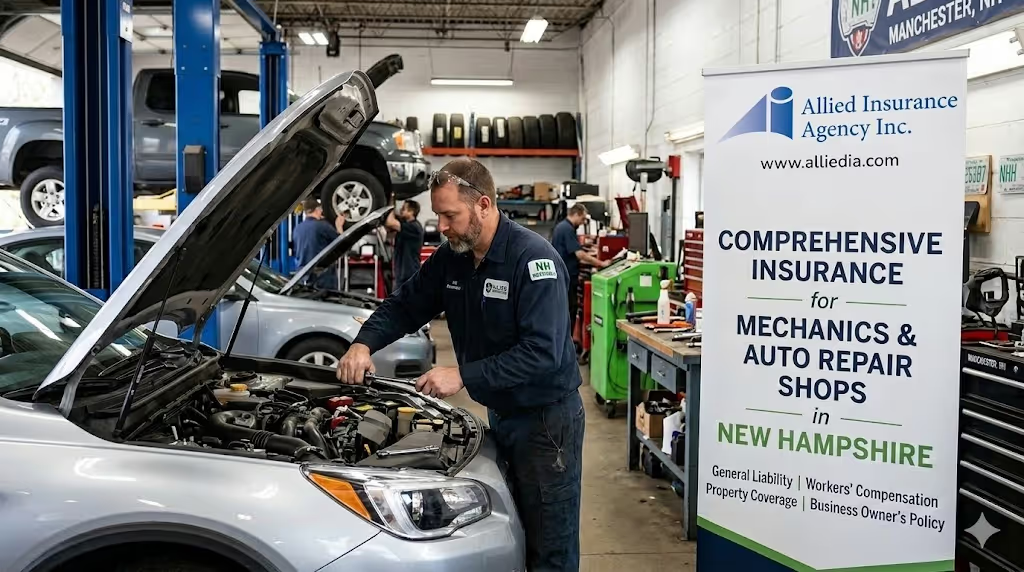
Allied Insurance Agency is an independent agency located in Bow, NH that offers a comprehensive range of personal and business insurance solutions. For mechanics, an independent agent can:
- Compare policy forms and pricing across carriers to find the best fit
- Explain subtle differences between legal liability and direct primary garagekeepers coverage
- Help customize coverage for mobile mechanics, specialty services, and fleet agreements
- Serve as a local advocate during claims to speed resolution and maintain client relationships
Contact Allied Insurance Agency for a free garage keepers insurance quote.
Mobile Mechanics and Specialty Services: Extra Considerations
Mobile mechanics have a different risk profile than fixed-location shops. Service calls put technicians on public roads and in customers’ driveways. Key coverages for mobile services include:
- Commercial Auto Liability with hired and non-owned options
- Tools and Equipment Floater covering tools left in a vehicle at a job site
- On-site Liability for damage to third-party property or injuries while working on a customer’s property
- Pollution Liability if the technician handles or transports fuel and oils that could cause contamination
Mobile shops should keep clear records of where services were provided, who authorized them, and take photographic proof of conditions. Mobile work often benefits from higher liability limits because exposure is spread across many public locations.
Common Claims Scenarios and How Insurers Respond
Understanding how common claims unfold helps shop owners prioritize protections:
Claim Example 1: Damage While in Custody
A customer leaves a car for engine work. During storage, a flood damages multiple vehicles. Garagekeepers coverage, if it includes flood or comprehensive perils, responds for customer vehicle repairs. Documentation of vehicle value and intake records speed settlement.
Claim Example 2: Customer Slip and Fall
A customer slips on an oily patch in the waiting area and breaks a wrist. General liability applies. The shop’s defense and settlement depend on housekeeping records, signage, and prompt assistance. A proactive safety program and posted warnings reduce such incidents.
Claim Example 3: Employee Injury
An employee injures their back while lifting a heavy transmission. Workers’ compensation covers medical and partial wage replacement. Timely reporting and a return-to-work plan can mitigate premium increases.
Case Studies: Tailored Packages for Different Shop Types
These condensed examples show typical coverage mixes. These are illustrative only and not quotes.
Small Independent Mechanic (1-3 Employees)
- General liability with garage operations endorsement
- Garagekeepers on a legal liability basis with modest limits
- Commercial auto for a single service van
- Workers’ compensation for employees
- Tools floater for high-value portable tools
Mid-Size Repair Shop (5-15 Employees)
- Expanded garage liability and direct primary garagekeepers with higher per-vehicle limits
- Commercial auto fleet policy for parts and towing
- Property insurance for multiple buildings and contents
- Workers’ compensation and an umbrella policy
- Cyber liability and crime coverage
Specialty or Performance Shop
- High-value vehicle coverage with customized per-vehicle limits
- Specialized parts and inventory coverage
- Contractor bonds for performance agreements
- Enhanced inland marine for high-value equipment
Each shop needs customization. Revenue size, vehicle types, and customer contracts should guide the policy selection.
Choosing Limits and Deductibles: A Practical Approach
Many shop owners ask how much liability and property insurance they need. A practical approach includes:
- Assessing the average value of customer vehicles on site and choosing per-vehicle limits that cover the most likely high-cost scenarios.
- Selecting aggregate limits to reflect peak exposure months, like during winter when storage increases.
- Balancing deductibles against available cash reserves. Shops with steady cash flow can accept higher deductibles to lower premiums, while those with tighter reserves should choose lower deductibles.
- Considering an umbrella policy if the shop has high public exposure or fleet contracts with larger clients.
How Allied Insurance Agency Can Help
As an independent agency based in Bow, NH, Allied Insurance Agency specializes in serving local businesses, including mechanics and automotive shops across Hooksett and Concord. The agency evaluates each shop’s unique exposures, compares multiple carriers, and constructs packages that fit both budget and risk tolerance.
Allied provides guidance on loss control, helps interpret policy language, and assists with claims advocacy. For mechanics looking for specific coverage such as garagekeepers or a tailored commercial package, an agent can clarify the trade-offs between legal liability and direct primary forms and recommend limits that reflect local market conditions.
Contact Allied Insurance Agency for a free garage keepers insurance quote.
Checklist: What To Bring to Your Insurance Meeting
Having certain documents and information ready speeds the quoting process:
- Business formation documents and licensing
- List of services offered and any specialty equipment
- Years in business and annual revenue
- Payroll and number of full-time and part-time employees
- Vehicle list and VINs
- Claims history and loss runs for the past 3 to 5 years
- Photos of the premises, storage areas, and security measures
- Customer contracts or fleet agreements
Having this information allows Allied or any independent agent to provide accurate, competitive proposals tailored to the shop’s needs.
Common Mistakes to Avoid
- Assuming personal policies will cover business risks. Personal auto or homeowner policies often exclude commercial operations.
- Underinsuring customer vehicles. Low per-vehicle limits can result in uncovered costs and damaged customer relationships.
- Neglecting to disclose operations. Failing to tell an insurer about towing, mobile services, or storage can lead to claim denial.
- Choosing price over policy form. Comparing only premiums without reading policy language can leave gaps in key areas such as pollution or subcontractor exclusions.
Frequently Asked Questions
Does my personal auto policy cover me if I use my truck for shop deliveries?
Personal auto policies typically exclude business use. For routine deliveries or towing, a commercial auto or a hired and non-owned endorsement is usually necessary. Always check with your agent to avoid gaps.
What is the difference between garage liability and garagekeepers?
Garage liability protects against third-party claims arising from business operations, such as a customer injured on the premises. Garagekeepers specifically covers damage to customers' vehicles while they are in the shop’s care. Many shops need both.
Is workers’ compensation required in New Hampshire?
New Hampshire generally requires employers to carry workers’ compensation for employees. Specific obligations can vary with business size and employee classification. An independent agent can help determine legal requirements and appropriate coverages.
How does direct primary garagekeepers differ from legal liability?
Direct primary pays customer vehicle claims regardless of legal fault. Legal liability pays only when the shop is legally found responsible for the damage. Direct primary tends to provide faster customer payouts but costs more.
How often should a shop review its insurance policies?
Shops should review their policies annually and anytime they add services, purchase new equipment, acquire vehicles, or sign new fleet contracts. Regular reviews prevent unexpected coverage gaps as the business evolves.
Conclusion
Insurance for mechanics requires a thoughtful blend of coverages that match a shop’s unique exposures. From garagekeepers to commercial auto, workers’ compensation, and inland marine protection for tools, each policy plays a role in preserving a business’s financial health and reputation. Independent agents like Allied Insurance Agency in Bow can compare carriers, explain nuanced policy differences, and build tailored programs for mechanics across Hooksett, Concord, and the wider New Hampshire area.
Protecting the shop means more than buying a policy. It means documenting intake procedures, investing in security, training employees, and maintaining open communication with an agent. That approach reduces claims, lowers costs, and keeps customers coming back.
Ready to protect your shop? Contact Allied Insurance Agency for a free garage keepers insurance quote.