Is Your HVAC Business Really Protected? The Truth About Contractor Insurance
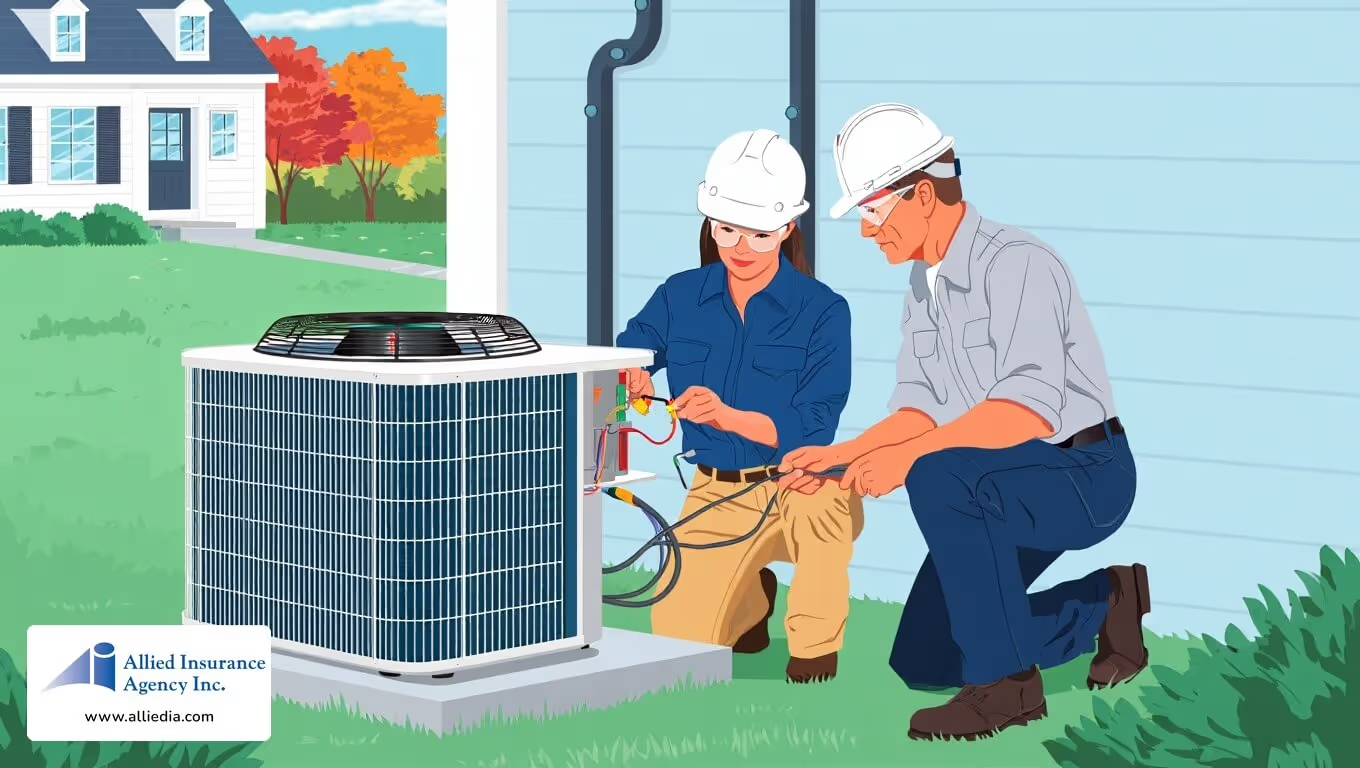
Local service firms in Concord, Bow, and Hooksett work day to day on heating, ventilation, and refrigeration systems. Even disciplined teams face jobsite risks that can hit cash flow and hard-earned reputation.
An independent agency evaluates a company by scope of services, project size, vehicles, crews, and tools. That local review helps shape practical coverage strategies for residential changeouts, light commercial retrofits, and ongoing maintenance work.
No two contractors are the same, so an agency aligns liability and property terms with real job conditions. Policy forms and endorsements vary and the policy controls the outcome. Issuance depends on underwriting, availability by state, and the specific facts of any claim.
Allied Insurance Agency provides market access, certificate management, contract review help, and a free artisan contractors insurance quote for New Hampshire firms seeking clear, actionable protection.
Key Takeaways
- Local risks require tailored coverage that matches real job conditions.
- An independent agency evaluates services, crews, tools, and vehicles.
- Policy documents and underwriting determine final terms and limits.
- The right mix helps meet landlord and general contractor requirements.
- Allied Insurance Agency offers free quotes and practical contract guidance.
Why HVAC Contractors in New Hampshire Need Comprehensive Protection
Working across Concord, Bow, and Hooksett exposes service teams to tight driveways, aging structures, and harsh winter streets that raise everyday hazards. These local realities increase slip, trip, and fall risks for workers and for third parties.
Real risks at job sites in Concord, Bow, and Hooksett
Tight access and older building stock can cause accidental damage to finishes or equipment. A single refrigerant line puncture, for example, can produce water or chemical damage inside a home or small retail space and trigger costly claims.
How one incident can threaten cash flow and reputation
Work often happens in occupied spaces, which increases client contact and the chance of third‑party allegations.
- Vehicle congestion near neighborhoods and plazas raises backing accident and theft exposures.
- Supply chain delays make rework more expensive on fixed‑price jobs.
- Municipal permits may require specific certificates and endorsements before work begins.
Strong risk controls, crew training, and clear documentation—photos, signed work orders, and maintenance logs—help when claims arise. Because outcomes depend on facts and policy wording, good files improve underwriting and steady coverage terms. Comprehensive protection lets the business respond fast and keep service on schedule after an incident.

What Is hvac contractors insurance?
A tailored protection program bundles multiple policies so a service business can keep crews working and customers protected.
hvac insurance refers to a coordinated package of coverages that protect people, vehicles, tools, and property exposures arising from installation, service, and maintenance work.
How a tailored policy bundle protects operations
Common types include general liability, workers' compensation, commercial auto, business property, inland marine for tools and materials, and an umbrella for higher limits.
These policies work together to reduce gaps. A good program helps meet certificate requirements for general contractors and property managers across Concord and Bow so projects start on time.
Coverage varies by state and policy terms
Availability and pricing depend on underwriting. Carriers evaluate payroll, vehicle counts, services, loss history, and safety practices. Costs can change after audits.
- Policy documents control claims; examples here are educational.
- Installation photos, serial numbers, and inventory help support claims and lower disputes.
- An independent agency compares options, aligns effective dates, and flags limitations that could affect peak‑season operations.
Bottom line: a well‑structured program improves resilience, lets the business respond to a covered loss, and helps protect cash flow and reputation on each job.
Core Coverages Every HVAC Business Should Consider
Every service business needs core protections that match daily risks and contract demands. An independent New Hampshire agency evaluates operations, crew activity, vehicles, and tools to recommend the right mix of policies.
General liability insurance for third‑party injuries and property damage
General liability responds to third‑party claims for bodily injury or property damage from field work. Landlords and general contractors in Concord and Hooksett often require specific limits and certificates.
Workers’ compensation for employee injuries and medical bills
Workers compensation covers job‑related injuries and medical bills for employees who lift equipment, climb ladders, or work in tight spaces. This coverage is regulated at the state level and helps manage return‑to‑work outcomes.
Commercial auto insurance for vehicles, tools, and transit exposures
Commercial auto insurance protects owned and leased vans for collisions, liability, and physical damage. It also addresses tools and equipment in transit and is influenced by driver records and vehicle count.
Business property and inland marine for tools and equipment off‑site
Business property protects shop inventory and office gear, while inland marine extends coverage to tools and equipment off‑site or in transit to Bow and nearby towns.
- Align policy effective dates to simplify certificates and renewals.
- Use SOPs for keys, tool storage, and van security to reduce theft risks and costs.
- Coordinate named insureds and additional insured endorsements to meet contract terms.
Contact Allied Insurance Agency for a free artisan contractors insurance quote to review coverage, limits, and costs tailored to local operations.
Specialized Protection for HVAC Projects and Materials
When equipment travels from shop to roof, standard property forms often leave gaps. This section explains targeted coverages that protect units, staged materials, and portable gear while a project moves through delivery, storage, and install.
Installation floater (inland marine)
Installation floater is a type of inland marine coverage that protects units, ductwork, and related materials while in transit, stored off‑site, or awaiting installation at a customer location.
Example: A rooftop unit staged for crane day in Concord suffers vandalism; the floater can cover the loss where commercial property would not.
Tools and equipment coverage
Contractor’s tools and equipment coverage protects portable assets from theft and accidental damage. It commonly covers recovery machines, vacuum pumps, and hand tools.
Practical tip: record serial numbers, photos, and job staging plans to speed claims and reduce disputes over what was on-site.
Builder’s risk and commercial umbrella
Builder’s risk protects structures under construction and on-site materials during ground‑up or major renovation work.
The commercial umbrella extends liability limits above general liability, commercial auto, and employer’s liability when underlying limits are exhausted. This is useful for larger municipal or multi‑unit jobs in Bow and Hooksett.
- Commercial property typically protects the main location only, so floaters and tool policies fill jobsite gaps.
- These additions can affect costs, but they are often required by contract and protect margins on larger installs.
- Match limits to project size and delivery schedules, especially when multiple units move together or are staged overnight.
New Hampshire Licensing, Bonds, and Compliance Basics
Understanding state and town requirements helps a business avoid permit delays and costly rework. New Hampshire licensing often requires exams, work experience, and proof of insurance or surety bonds before a contractor may legally perform service work.
Why requirements differ by state and locality
Rules vary by municipality. Concord, Bow, and Hooksett may add endorsement language or minimum limits for permits. Local building departments set practical expectations that affect bids and schedules.
Verifying local obligations before bidding or pulling permits
Checklist highlights:
- Proof of active policies, surety bonds, and documentation of trade experience or exams.
- Confirm minimum limits and any additional insured wording requested by the permit office.
- Ensure workers' compensation and commercial auto are reported and classified correctly for audits.
Tip: Keep an up‑to‑date compliance binder with certificates, bond copies, tool inventories, and serial numbers. Training on ladder safety and lifting reduces injuries and helps manage compensation costs.
Remember: coverage availability and terms vary by carrier and state; only policy documents control claim outcomes. Staying current on licenses, bonds, and certificates speeds approvals and keeps crews working on schedule.
Common Claim Scenarios HVAC Contractors Face
Field incidents can escalate quickly, turning a routine service call into a multi‑party claim. Teams in Hooksett and nearby towns see similar patterns: water, slips, autos, theft, and lifting injuries.
Water leaks and client complaints
During a coil replacement, a missed drain connection can produce property damage and a client complaint. Timely photos, signed work orders, and prompt reporting help smooth the claims process.
Job site slips and third‑party injuries
Wet floors or hoses create slip‑and‑fall exposures. Using cones, mats, and a short job hazard analysis reduces frequency and strengthens the business' position if a claim arises.
Auto incidents en route to Hooksett jobs
Parking‑lot collisions and fender benders occur traveling to and from sites. These events may involve both auto liability and physical damage; incident reports and witness statements matter.
- Theft from a van: police reports and serial numbers help tools and equipment claims.
- Employee injuries: lifting air handlers or ladder falls tie to workers' compensation and return‑to‑work planning.
- Dropped units during a crane pick cause damage and schedule loss—installation floaters can respond.
Key reminder: claims outcomes hinge on policy language and facts—maintenance logs, scope of work, and client approvals. Crews should keep clear job logs, collect signatures, and store serial numbers to speed investigations and reduce disputes. For tips to reduce exposure and avoid common claims, review established procedures.
Costs and Rating Factors HVAC Companies Should Expect
Underwriting centers on measurable business activity, so premiums track what a firm actually does day to day.
Payroll, crew size, vehicle count, and driving records
Insurers use payroll, number of employees, and job classifications to set base costs and audit expectations. A larger crew or higher payroll raises exposure and can increase premium.
Service mix, job site risks, and equipment values
Residential changeouts carry different risks than rooftop commercial work. The value of tools and staged property affects inland marine and tools coverage.
Claims history, limits, deductibles, and locations served
Past claims, requested limits, and deductibles shift pricing. Serving Concord, Bow, or wider territories changes underwriting assumptions and may affect cost.
- Vehicle count, type, radius, and driver records shape commercial auto and auto insurance pricing.
- Accurate equipment schedules avoid underinsurance and help control premiums.
- Safety programs and driver training can lower loss frequency and improve rates over time.
Remember: each company is individually underwritten; availability, discounts, and rates vary by state and product. For tailored pricing insight, review cost drivers and Contact Allied Insurance Agency for a free artisan contractors insurance quote.
Policy Limits, Deductibles, and Endorsements That Fit Your Risk
A clear strategy for limits and retentions helps match coverage to the size of each job and client demand.
Choosing liability limits — select limits that satisfy typical general contractor and landlord requirements in New Hampshire. For small residential jobs, common limits may suffice; for larger commercial or municipal work, align primary liability insurance limits with contract minima and consider additional insured wording.
Set property and equipment values realistically
Base property and inland marine limits on peak on‑hand inventory and the single highest‑value unit staged on site. Accurate schedules and valuations reduce settlement disputes.
Deductible and retention strategies
Use higher deductibles to lower premium but keep enough cash flow to cover per‑occurrence costs. Distinguish between routine per‑claim deductibles and larger catastrophic retentions that may apply to umbrella or specialty policies.
- Align umbrella limits with the largest contracts and the vehicle schedule when crews run multiple trucks.
- Review endorsements annually — primary/noncontributory, completed operations, and waiver provisions often matter most.
- Confirm policy definitions, exclusions, and valuation methods at renewal; the policy language controls outcomes.
How Claims, Underwriting, and Exclusions Really Work
Underwriting, claims history, and day‑to‑day controls shape whether coverage is offered and at what cost. An independent agency evaluates payroll, operations, driver records, past claims, and safety programs. Applicants are individually underwritten and not every business will qualify for the same terms.
Why issuance of coverage is subject to underwriting
Underwriters review measurable facts to set eligibility and pricing. They consider crew size, vehicle schedules, and job types when quoting policies.
Claims investigations and policy language govern outcomes
After an incident, adjusters investigate and determine coverage based on the policy wording: insuring agreements, conditions, endorsements, and exclusions. Documentation and timely reporting materially affect results.
Typical exclusions to review
- Faulty workmanship and routine wear and tear.
- Contractual liabilities that exceed what the policy grants.
- Certain pollution or chemical release events unless endorsed.
Practical steps: workers and supervisors should preserve evidence, take photos, collect witness statements, and save damaged parts for adjuster review. Maintain accurate certificates and additional insured endorsements to reduce disputes.
Note: some costs and specific types of compensation may not be covered without endorsements. Compensation insurance for employee injuries follows policy and state law definitions. This guidance is educational only; the policy controls all outcomes and availability varies by state.
How to Buy HVAC Insurance in New Hampshire with Local Service
A local agent who knows Concord, Bow, and Hooksett speeds placement and helps match coverage to real job needs.
Working with an independent insurance agency that knows Concord, Bow, and Hooksett
An independent local N.H. insurance agency benchmarks quotes across markets and recommends coverages that fit each company's services and operations. They compare policy language, exclusions, and start dates so contracts and permits line up.
Bundling coverages and aligning effective dates
Collect loss runs, a driver list, equipment and tools values, and recent safety records before marketing the account. That paperwork shortens underwriting and shows value to carriers.
- Bundle general liability, workers' comp, commercial auto, property, and inland marine.
- Coordinate effective dates to simplify renewals and certificates.
- Request endorsements like primary/noncontributory and waiver of subrogation when required by GCs or landlords.
Service advantages and next steps
Fast COI turnarounds, claims advocacy, and audit support keep operations moving through busy seasons. Maintain driver training and auto schedules—these items influence costs and underwriting decisions.
Prepare equipment inventories, subcontractor agreements, and updated job profiles before renewal. Contact Allied Insurance Agency for a free N.H. artisan contractors insurance quote.
Conclusion
Clear, coordinated coverage keeps crews working and customers confident when projects hit problems.
For a small service business in New Hampshire, a well-built program protects against common risks and helps meet permit and contract needs. The right mix of liability insurance, auto and property coverages supports bids and keeps work on schedule.
Independent guidance aligns endorsements, documentation, and limits with how each customer is served in Concord, Bow, or Hooksett. Policy documents govern outcomes and availability varies by state, so regular reviews matter.
Review current policies against active projects and upcoming bids. Start with a short discovery call and a document checklist to prepare for quotes and renewals.
Contact Allied Insurance Agency for a free artisan contractors insurance quote.