Restaurant Liability Insurance: A Practical Guide for New Hampshire Restaurateurs
Restaurant liability insurance is a critical piece of protection for any food service operation in New Hampshire. Whether the business is a small café in Bow, a bustling family-run diner in Hooksett, or a fine-dining establishment in Concord, the risks are real and varied. An independent insurance agency that understands local regulations and the hospitality business can help owners identify exposures, bundle the right policies, and secure competitive premiums. Contact Allied Insurance Agency for a free restaurant liability insurance quote.
Why N.H. Restaurant Liability Insurance Matters
Restaurants face a mix of hazards that few other businesses do. Customers slip on wet floors. A delivery driver causes a collision. A guest becomes ill after eating contaminated food. A disgruntled patron posts a defamatory review. Each of these events can lead to bodily injury claims, property damage, reputational harm, and costly lawsuits.
Restaurant liability insurance is a set of coverages designed to reduce the financial impact of those events. Proper coverage helps pay for medical bills, legal defense, settlements or judgments, and sometimes business interruption costs. For New Hampshire restaurateurs, having the right policy is not only prudent, it is often required by landlords, lenders, or licensing authorities.
Core Coverages Restaurateurs Should Consider
Insurance needs vary by operation size, menu complexity, and service model. However, several coverages are commonly recommended for restaurants.
General Liability Insurance
General liability protects against third-party claims for bodily injury and property damage that arise from business operations. Examples include a customer slipping in the dining room or a parked car being dented by a falling sign. Limits typically start at $1 million per occurrence with a $2 million aggregate, but higher limits are common for busy or high-exposure establishments.
Liquor Liability Insurance
Restaurants and bars that serve alcohol need liquor liability coverage to protect against claims stemming from intoxicated patrons. In New Hampshire, dram shop laws can hold servers and establishments responsible if alcohol service leads to injury or property damage. Liquor liability can be part of a general liability policy or a separate endorsement, and limits should reflect the level of alcohol sales and late-night service.
Commercial Property Insurance
This coverage protects the physical building (if owned), kitchen equipment, furniture, inventory, and supplies from perils such as fire, theft, and vandalism. For food businesses, consider replacement cost valuation for equipment and a detailed inventory schedule for high-value items like refrigeration units and POS systems.
Business Income and Extra Expense Insurance
Also called business interruption insurance, this coverage replaces lost income and covers extra expenses if the restaurant must close temporarily after a covered loss. For example, if a kitchen fire forces a three-week closure, this policy helps pay ongoing bills and allows the business to recover revenue during rebuilding.
Workers’ Compensation
New Hampshire law requires employers with one or more employees to provide workers’ compensation coverage. This pays medical benefits and a portion of lost wages to employees injured on the job, such as a cook who sustains burns or a server who slips carrying a tray. It also protects the business from employee lawsuits related to workplace injuries.
Commercial Auto Insurance
If the restaurant operates delivery vehicles or reimburses personal vehicles for deliveries, commercial auto insurance or hired and non-owned auto coverage is essential. These cover liability for accidents involving delivery drivers and can include physical damage coverage for owned vehicles.
Product Liability and Food Contamination Coverage
Foodborne illness claims can be devastating. Product liability covers claims arising from the food sold by the restaurant. Some insurers offer specific food contamination or foodborne illness endorsements that also cover recall costs, testing, and publicity expenses associated with a contamination event.
Cyber Liability Insurance
Point-of-sale systems and online ordering platforms store customer payment data. A data breach can trigger liability for credit card fraud, regulatory fines, and public relations costs. Cyber liability coverage helps with breach response, notification costs, forensic investigations, and legal expenses.
Employment Practices Liability Insurance (EPLI)
Restaurants are high-turnover workplaces where disputes over hiring, firing, wages, or discrimination can arise. EPLI protects against claims by employees alleging wrongful termination, harassment, discrimination, or wage-and-hour violations.
Specialized Coverages and Endorsements
Beyond core policies, certain endorsements or stand-alone products can address niche risks.
- Equipment Breakdown Coverage - Replaces or repairs failed refrigeration, ovens, and other critical equipment.
- Spoilage Coverage - Covers food loss from refrigerator or freezer breakdown or power outage.
- Commercial Umbrella Insurance - Provides excess liability limits above general liability, auto, and employer liability policies.
- Liquor Liability Enhancement - Covers alcohol-related legal defense and provides additional limits for high-risk exposures.
- Delivery Liability Add-ons - Extends coverage for third-party delivery drivers or integrates gig-platform exposure.
How Local Factors in New Hampshire Affect Coverage Needs
New Hampshire presents distinct considerations for restaurant owners. Weather, tourism patterns, state laws, and local municipal requirements all affect exposure and insurance costs.
Weather and Seasonal Risks
Winters can be harsh in New Hampshire. Snow and ice increase slip-and-fall risks, roof loads, and freeze damage to pipes and equipment. Seasonal businesses near lakes or tourist areas may need different business interruption considerations tied to off-season closures or summer peaks.
Tourism and Event-Driven Exposure
Restaurants in Concord and Hooksett may see surges during events, state functions, or college-related weekends. Higher foot traffic means elevated liability exposure and possibly higher limits or aggregate considerations.
Regulatory and Licensing Environment
Local licensing, health department inspections, and New Hampshire alcohol service laws influence coverage. For example, compliance with server training programs can reduce liquor liability risk and insurance costs.
Real Examples from the Region
An independent restaurant in Hooksett added spoilage coverage after a prolonged winter power outage caused refrigeration failure. The policy reimbursed thousands in lost inventory and allowed quick restocking before a busy holiday weekend.
In Concord, a small bistro that relied on third-party delivery platforms updated its commercial auto and non-owned auto policies after a delivery driver caused a multi-car collision. The revised coverage clarified who was responsible for defense costs and medical claims.
Factors That Influence Premiums
Insurance pricing reflects the specific risk profile of the restaurant. Underwriters consider a mix of tangible and intangible factors.
- Type of Cuisine and Menu - Deep-frying, open flames, and high alcohol sales increase risk.
- Annual Revenue and Payroll - Higher sales and larger payrolls often lead to higher premiums and higher coverage needs.
- Location and Foot Traffic - Busy streets or event districts carry more exposure.
- Claims History - A clean claims record typically lowers premiums, while recent claims trigger higher rates or underwriting scrutiny.
- Risk Management Practices - Employee training, slip-resistant flooring, fire suppression systems, and security reduce risk and can earn discounts.
- Contractual Obligations - Leases and vendor contracts often require specific limits or additional insured endorsements.
Cost Examples and Budgeting
Costs vary widely, but a rough idea helps restaurateurs budget. A small café with limited alcohol sales and annual revenue under $250,000 might expect to pay between $1,200 and $3,000 annually for a basic package including general liability, property, and workers’ compensation. A mid-sized restaurant with full bar service and $1 million in revenue could see premiums from $5,000 to $20,000 depending on location, claims history, and coverages.
Commercial umbrella policies often start around $400 to $1,200 per year for an additional $1 million in limits. Food contamination endorsements and cyber liability policies are priced based on revenue and risk controls.
These numbers are illustrative. Contact Allied Insurance Agency for a free restaurant liability insurance quote.
How an Independent Agent Adds Value
An independent N.H. insurance agent works for the client, not a single carrier. For New Hampshire restaurateurs, that independence translates into tailored coverage options, competitive pricing, and local expertise.
- Policy Comparison - The agent can compare coverages, limits, and exclusions across multiple carriers to find the best fit.
- Bundle Solutions - Packaging coverages into a Business Owner's Policy, or BOP, can save money while ensuring comprehensive protection.
- Local Knowledge - Familiarity with Hooksett, Bow, and Concord regulations and market conditions reduces surprises during underwriting and claims.
- Claims Advocacy - Independent agents help navigate the claims process, liaising with carriers to get fair treatment and timely payouts.
Allied Insurance Agency specializes in local, personalized service. The agency can assess specific exposures for New Hampshire businesses and recommend strategic coverage combinations. Contact Allied Insurance Agency for a free restaurant liability insurance quote.
Risk Management Practices That Lower Premiums and Claims
Insurance transfers risk, but risk management reduces the likelihood that claims will ever be needed. Common, practical measures also make a business more attractive to insurers.
- Employee Training - Regular food safety, alcohol server training, and customer service training reduce contamination and alcohol-related incidents.
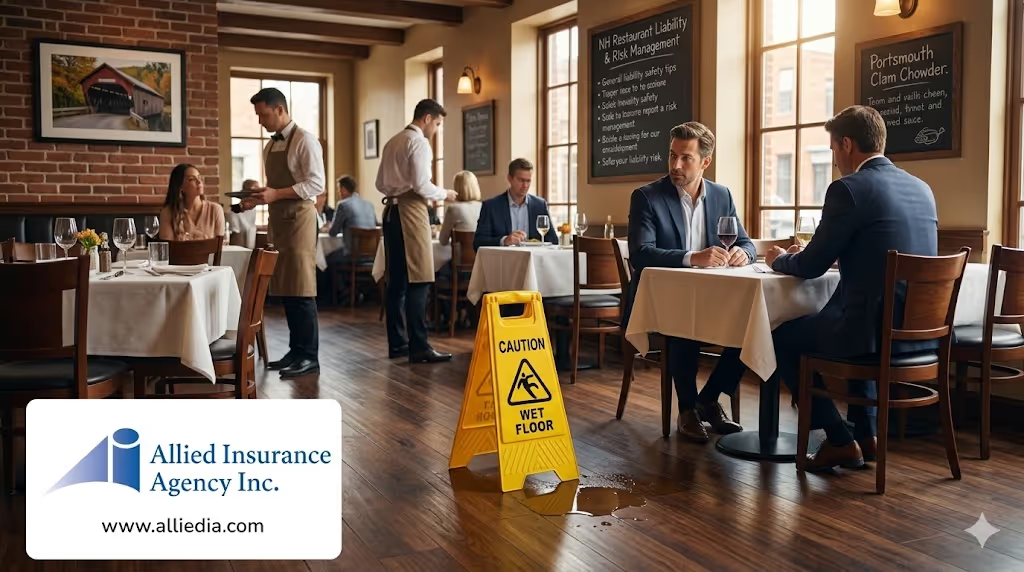
- Slip-and-Fall Prevention - Non-slip mats, prompt spill cleanup, adequate lighting, and clear signage for wet floors cut down on injuries.
- Equipment Maintenance - Routine servicing of HVAC systems, refrigeration, and kitchen equipment prevents breakdowns and reduces spoilage risk.
- Security Measures - Cameras, well-trained staff, and lighting can reduce theft, assault, and reputational claims.
- Incident Documentation - Clear incident reporting and photo documentation speed claim resolution and limit exaggeration.
- Contracts and Vendor Management - Properly drafted hold-harmless agreements and certificates of insurance from caterers and delivery partners reduce downstream liability.
Choosing Limits and Deductibles
Choosing appropriate limits requires balancing protection with budget constraints. Common considerations include the size of the dining room, average check size, and the maximum foreseeable claim.
- Per-Occurrence vs Aggregate Limits - Per-occurrence limits define the maximum paid for a single claim, while aggregate limits cap total payments in a policy period. Restaurants with frequent events may want higher aggregate limits.
- Higher Limits for Liquor Sales - If alcohol makes up a significant portion of revenue, higher liquor liability limits are recommended.
- Deductible Selection - Higher deductibles can lower premiums but increase out-of-pocket costs for smaller claims. For small, frequent claims, a lower deductible often makes sense.
- Umbrella Policies - For peace of mind, an umbrella policy adds an extra layer of protection for catastrophic claims that exceed primary policy limits.
Common Pitfalls and How to Avoid Them
Restaurateurs sometimes make avoidable mistakes when buying coverage or managing risk.
- Underinsuring Property and Equipment - Not listing expensive kitchen appliances or undervaluing replacement costs leads to coverage gaps.
- Ignoring Delivery Exposure - Assuming a third-party platform handles liability can leave gaps for hired or non-owned vehicles.
- Overlooking Liquor Laws - Failing to understand New Hampshire dram shop exposure can result in severe liability for negligent service.
- Not Updating Policies After Changes - Renovations, added patio seating, or new revenue streams like catering require policy adjustments.
- Choosing the Lowest Price Only - Cheapest policy may have inadequate limits, broad exclusions, or poor claims service.
Steps to Get the Right Coverage
Securing suitable restaurant liability insurance is a process. A practical sequence keeps it organized.
- Conduct a Risk Assessment - Inventory assets, list revenue streams, identify high-risk operations, and document delivery and alcohol service practices.
- Gather Documentation - Provide recent loss runs, lease agreements, alcohol licenses, and an equipment inventory to the agent.
- Request Multiple Quotes - An independent agent will solicit several carriers and compare coverages, not just price.
- Review Policy Forms Carefully - Look for exclusions, sublimits, and required endorsements.
- Implement Risk Controls - Make changes that improve safety and qualify for premium credits.
- Reassess Annually - Update coverage after any business changes and at renewal time.
Contact Allied Insurance Agency for a free restaurant liability insurance quote. The agency’s local knowledge of Bow, Hooksett, and Concord businesses helps ensure policies match operational realities.
Claims Handling: What Restaurateurs Should Expect
Efficient claims handling can make or break a recovery. Restaurateurs should know how the process works and how an independent agent supports them.
- Immediate Steps - Secure the scene, provide care to injured parties, document the incident, and notify the insurer promptly.
- Preserve Evidence - Keep photos, incident reports, video footage, and witness statements.
- Work With the Agent - The agent coordinates with the carrier and advises on reserving documents and legal representation.
- Manage Communication - Avoid admitting fault publicly. Let the agent and carrier handle legal statements.
- Learn and Improve - After the claim, implement corrective action to reduce recurrence and demonstrate prudent risk management to the insurer.
Case Study: A Concord Café That Recovered Quickly
A mid-sized café in Concord experienced a kitchen grease fire that forced closure for repair and cleaning. The business had a BOP with business income and equipment breakdown endorsements. The claim covered equipment replacement, loss of income during closure, and cleanup costs. Because the café worked closely with its independent agent and documented losses, the claim process moved quickly. The café reopened within six weeks and avoided bankruptcy.
The case highlights two points. First, the right combination of coverages matters. Second, an independent agent who knows local service providers and the insurer’s processes speeds recovery.
Why Local Relationships Matter
Insurance is partly a local business. Allied Insurance Agency’s experience with New Hampshire health inspectors, municipal permit offices, and local contractors adds practical value during underwriting and claims. The agency can help restaurateurs anticipate regulatory steps after an incident and recommend vendors for repairs to minimize downtime.
For restaurateurs in Bow, Hooksett, Concord, and across the capital region, that local perspective can be the difference between a claim that disrupts business and one that is handled smoothly. Contact Allied Insurance Agency for a free restaurant liability insurance quote.
Selecting an Agent: Questions to Ask
When choosing an agent or agency, restaurateurs should ask targeted questions to evaluate fit and capability.
- How many restaurant clients do you currently represent in New Hampshire?
- Which carriers do you work with for hospitality accounts and why?
- Can you provide references from local restaurant owners?
- How do you handle claims advocacy and communication?
- Do you provide periodic risk reviews and on-site assessments?
- What discounts or risk management credits are available for specific safety practices?
Allied Insurance Agency encourages prospective clients to ask these questions. As an independent agency, it provides transparent comparisons and local referrals tailored to each restaurant’s needs.
Final Thoughts: Protecting the Business and Its Future
Running a restaurant is demanding. Bottom lines depend on consistent service, loyal customers, and a resilient approach to unexpected events. Restaurant liability insurance is not an optional expense; it is a financial safeguard that protects owners, employees, and guests.
Choosing the right mix of coverages requires thoughtful assessment of operations, revenue, and local exposures. An independent agent with local expertise helps craft a plan that balances protection and affordability. For restaurateurs across New Hampshire, from Bow to Hooksett to Concord, tailored restaurant liability insurance can preserve reputation, limit financial shock, and keep the kitchen open when incidents occur.
The agency provides personalized guidance for New Hampshire restaurants and can help identify coverage gaps and cost-saving strategies. Contact Allied Insurance Agency for a free restaurant liability insurance quote.
Frequently Asked Questions
What does restaurant liability insurance typically cover?
Restaurant liability insurance commonly includes general liability for bodily injury and property damage, commercial property coverage for equipment and inventory, business income for interruption losses, workers’ compensation for employee injuries, liquor liability if alcohol is served, and optional endorsements for cyber liability, food contamination, and spoilage.
Is liquor liability required in New Hampshire?
Liquor liability is not always statutorily required for every business, but New Hampshire dram shop laws create exposure for establishments that serve alcohol. Many landlords and lenders require liquor liability as a condition of lease or financing. It is highly recommended for any restaurant that serves alcohol.
How much coverage does a typical restaurant need?
Coverage needs depend on revenue, seating capacity, alcohol sales, and risk exposures. Many restaurants start with $1 million per occurrence and $2 million aggregate for general liability, but those limits often increase for high-risk operations. Umbrella policies add extra protection for severe claims.
Can delivery drivers be covered under a restaurant’s policy?
Yes, but it depends on whether the drivers are employees using company vehicles, independent contractors, or third-party platform drivers. Commercial auto insurance, hired and non-owned auto coverage, and careful contract language are important to clarify responsibilities and coverage for deliveries.
How can a restaurateur lower insurance premiums?
Improving risk management lowers premiums. Examples include server training and alcohol policies, slip-resistant flooring, fire suppression systems, routine equipment maintenance, and documented employee safety training. Bundling coverages and using an independent agent to compare carriers can also lead to savings.
Contact Allied Insurance Agency for a free restaurant liability insurance quote. For restaurateurs in Bow, Hooksett, Concord, and the wider New Hampshire region, the agency offers tailored solutions and local expertise to protect both the business and its future.