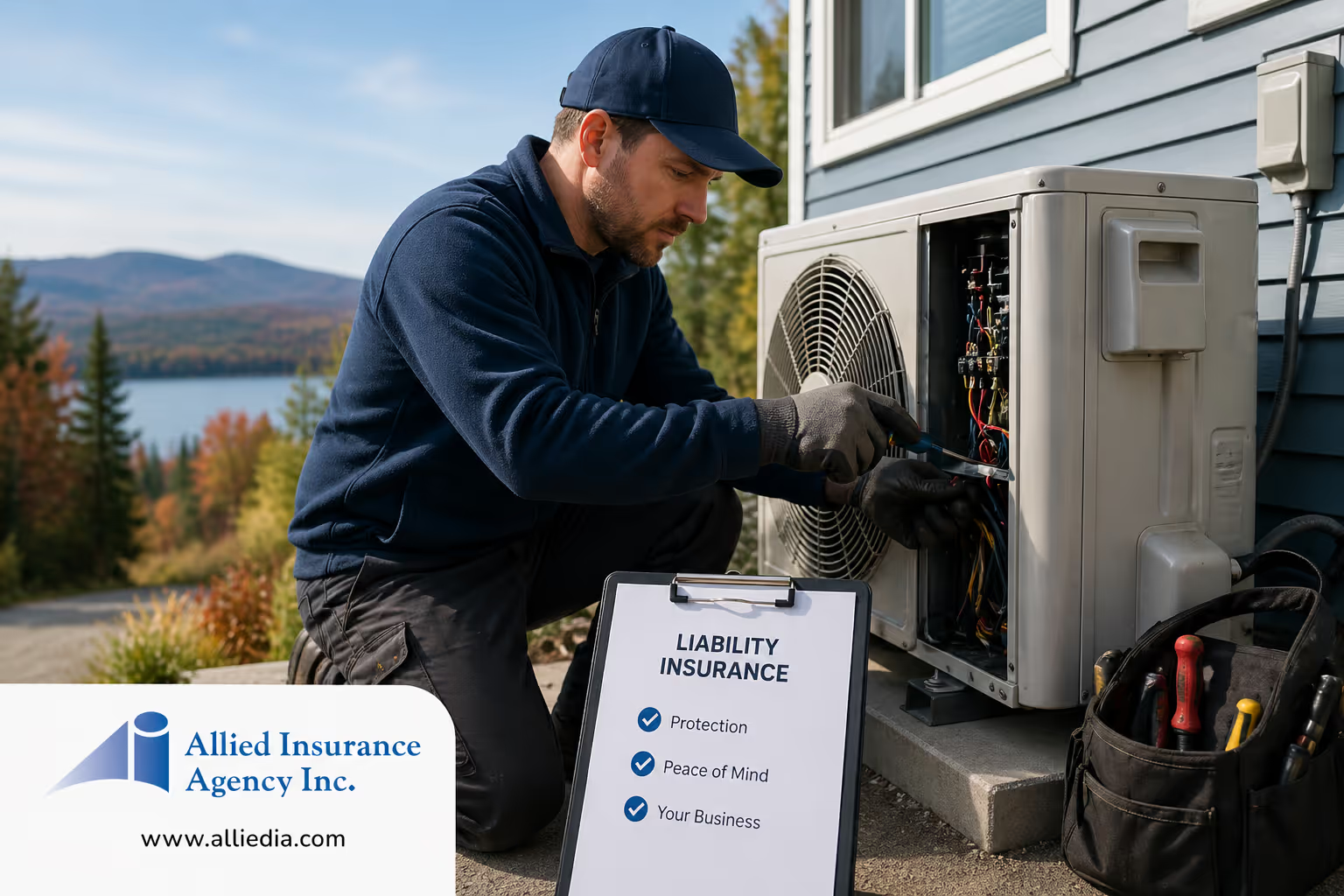
The Hidden Costs of Skipping HVAC Contractors Insurance (And How to Avoid Them)
A single slip on a Concord jobsite can turn a profitable week into a financial crisis. The Hidden Costs of Skipping HVAC Contractors Insurance (And How to Avoid Them) is not just a headline; it is a practical warning for heating, ventilation, and air conditioning contractors across New Hampshire. When contractors in Bow, Hooksett, Concord, and beyond skip adequate insurance, they often underestimate how quickly small incidents escalate into business-ending liabilities.
Why HVAC contractors Insurance Matters
HVAC contractors operate where the risks are visible and where many are hidden until they become costly. They handle heavy equipment, work in tight mechanical spaces, use electrical systems, and enter occupied homes and commercial buildings. Every one of these elements multiplies exposure to accidents, property damage, bodily injury, and errors in design or installation.
Insurance is not a regulatory box to check or an optional add-on. For most HVAC businesses in New Hampshire, insurance functions as a financial safety net, a bidding requirement for commercial work, and a tool to build trust with customers. The premium paid for the right policies is often modest compared to the price of a single major claim.
The Hidden Costs of Skipping HVAC Contractors Insurance
When contractors think about insurance, they usually compare immediate premium costs. What gets overlooked are the hidden costs that accrue when coverage is missing, inadequate, or poorly structured. Below are the common categories of hidden costs that frequently catch HVAC firms off guard.
1. Legal Defense and Judgment Costs
Legal expenses alone can devastate a small HVAC company. If a homeowner claims bodily injury or property damage, defense fees, court costs, and settlements or judgments can exceed what a business earns in several years.
- Defense bills: Lawyers cost money whether a case goes to trial or settles early. Even a single lawsuit can generate tens of thousands in legal fees.
- Settlements and judgments: A serious injury or large property loss can lead to judgments in the hundreds of thousands or more.
Without a commercial general liability policy that covers legal defense, contractors will pay defender fees directly, often from operating cash. This drains capital and can lead to bankruptcy.
2. Medical Expenses and Workers’ Compensation
When an employee is injured on the job, costs pile up quickly. In New Hampshire, employers with employees are required to provide workers’ compensation. The cost of wage replacement, medical treatment, rehabilitation, and potential long-term disability can be catastrophic for an uninsured contractor.
- Immediate medical costs: Ambulance, ER, surgery, imaging, and follow-up care.
- Lost payroll and replacement labor: Overtime, temporary hires, or delays in projects while staffing is rearranged.
- Potential fines: Operating without workers’ comp can lead to penalties from the New Hampshire Department of Labor.
3. Equipment Loss, Theft, and Replacement
HVAC technicians rely on vans, trucks, forklifts, tools, diagnostic equipment, and expensive furnaces or condensers in transit. Replacing stolen or damaged equipment out of pocket can stall jobs and damage relationships with clients and subcontractors.
- Tool replacement: Specialized tools add up quickly; losing a few high-value items can cost thousands.
- Vehicle damage: Collision or theft without commercial auto coverage creates direct repair costs plus lost productivity.
- Inland marine or equipment floater gaps: Without these endorsements, equipment transported between job sites may not be protected.
4. Business Interruption and Lost Revenue
One substantial claim or a major property loss at a contractor’s shop can halt operations for weeks. Business interruption losses include lost income, continuing payroll, and customer cancellations. Contractors often lack reserves large enough to cover these gaps.
When an HVAC firm loses a key truck, a job scheduled in Concord might be delayed, triggering penalty clauses and customer dissatisfaction. These ripple effects damage cash flow and future revenue streams.
5. Contractual Penalties and Lost Bids
Many commercial clients and municipal contracts require proof of insurance and specific limits. Without certificates of insurance, contractors are often ineligible to bid on large projects. Even small residential projects might demand coverage for certain exposures.
- Lost opportunities: No COI means no contract, and missed bids add up.
- Contractual indemnities: Poorly structured contracts can shift unexpected liability to the contractor, creating exposure beyond what an uninsured firm can handle.
6. Reputational Damage and Client Churn
One customer complaint that leads to a lawsuit, or a viral social media post about a job gone wrong, can damage a contractor’s reputation. The cost to repair trust might include additional marketing, discounted services, and time-consuming outreach.
7. Regulatory Fines, Licensing Issues, and Bond Claims
Skipping required insurance can trigger fines from state or local authorities. For contractors in New Hampshire, there are licensing and bond requirements for certain public and private projects. Failing to meet these requirements may result in canceled licenses, denied permits, or bond claims that erode capital.
8. Subcontractor and Vicarious Liability
Contractors are frequently held responsible for the acts of subcontractors. If a subcontractor is uninsured or underinsured, the primary contractor may be left footing the bill for damages that could have been covered by the subcontractor’s policy.
9. Cyber Risks and Payment Fraud
Modern HVAC businesses use digital records, payroll, and email communication with customers. Payment fraud, phishing, or a breach exposing customer data can create liabilities. Without cyber liability coverage, remediation and notification costs can be unexpectedly high.
Real-World Examples and Cost Comparisons
Concrete examples help illustrate the scale of hidden costs. The following scenarios are modeled on typical claims seen by independent insurance agents in New Hampshire.
Scenario 1: Customer Injury on a Residential Job
An HVAC technician works in a Hooksett basement. A homeowner trips over a replacement compressor and breaks a hip. Medical treatment, physical therapy, and a settlement total $120,000. Legal defense added $25,000. Total cost: $145,000.
A typical small business liability policy with a $1 million limit would absorb this claim minus deductibles and retained costs. Without insurance, the contractor pays directly and risks liens or judgments against personal assets.
Scenario 2: Stolen Tools and Stripped Van
A contractor’s van is broken into near Concord, resulting in $18,000 of stolen tools and replacement parts, plus $3,000 in vehicle repair. The uninsured contractor must cover $21,000 and endure canceled jobs. With inland marine and commercial auto coverage, the insurer reimburses replacement costs and helps manage downtime.
Scenario 3: Employee Electrocution and Workers’ Comp
An apprentice receives a severe electrical shock at a Bow jobsite. Hospitalization, rehabilitation, and partial disability costs total $250,000 over two years. Without workers’ compensation insurance, the employer may be liable for punitive fines and civil suits. With proper coverage, wage replacement and medical costs are managed through the carrier.
These scenarios show that insurance premiums are typically a fraction of potential exposure. A well-structured insurance program priced in the low thousands annually can protect against losses in the tens or hundreds of thousands.
How to Avoid The Hidden Costs of Skipping HVAC Contractors Insurance
The solution is straightforward: a tailored insurance program combined with proactive risk management. Below are specific steps HVAC contractors in New Hampshire should take to protect themselves and their businesses.
1. Build a Comprehensive Insurance Portfolio
Contractors should assemble a package of coverages that reflects their operations. Commonly recommended policies include:
- Commercial General Liability (CGL): Protects against third-party bodily injury and property damage.
- Workers’ Compensation: Required for employers and covers employee injuries and illnesses.
- Commercial Auto: Covers company vehicles for collision and liability.
- Inland Marine or Equipment Floater: Protects tools and equipment in transit and on sites.
- Professional Liability (Errors and Omissions): Covers design or installation mistakes for those who provide system design or engineering services.
- Umbrella/Excess Liability: Provides higher limits above primary liability policies for catastrophic claims.
- Surety Bonds: Often required for public or larger commercial projects.
- Business Income / Business Interruption: Reimburses lost income after a covered loss.
- Cyber Liability: Covers data breaches and digital threats.
- Equipment Breakdown: Covers sudden mechanical breakdown of equipment used in shop or office operations.
Contact Allied Insurance Agency for a free hvac contractor insurance quote.
2. Match Limits to Contract Requirements
Many contracts require specific liability limits and types of coverage. Municipal jobs or larger commercial projects in Concord or Hooksett may demand higher limits and specific endorsements. Contractors should obtain and maintain certificates of insurance that meet those requirements so they do not lose bids for documentation reasons.
3. Purchase Appropriate Endorsements
Endorsements tailor standard policies to industry-specific exposures. Examples include pollution liability for refrigerant handling, waiver of subrogation to comply with contract clauses, and primary-and-noncontributory endorsements to satisfy clients who want direct coverage.
4. Maintain Workers’ Compensation Compliance
New Hampshire law requires employers to carry workers’ compensation if they have employees. Beyond legal compliance, workers’ comp reduces the chance of employee lawsuits for workplace injuries and helps preserve the business’s reputation and financial stability.
5. Vet Subcontractors and Require Certificates
Contractors should require subcontractors to carry their own liability and workers’ compensation coverage and provide certificates of insurance naming the contractor as an additional insured where appropriate. This reduces vicarious liability and shifts the initial burden to the party directly responsible for an incident.
6. Adopt Written Contracts with Clear Risk Allocation
Contracts should address indemnity, limitation of liability, and insurance requirements. A sound contract reduces ambiguity after an incident and can limit exposure to open-ended claims.
7. Invest in Safety Training and Equipment Maintenance
Routine safety training helps prevent accidents. Regular vehicle maintenance and tool inspections reduce breakdowns and theft risk. Insurance carriers often reward strong safety records with lower premiums and better renewal terms.
Contact Allied Insurance Agency for a free hvac contractor insurance quote.
8. Review Coverage Annually
As a business grows, scope changes, or local regulations evolve, insurance needs shift. Annual reviews ensure that coverage remains adequate and cost-effective. Independent agents can recommend adjustments that reflect current operations.
How an Independent Agent Helps Contractors Avoid Hidden Costs
Independent insurance agents, especially local firms familiar with New Hampshire requirements, bring practical value. An independent agent does not represent a single carrier. Instead, the agent evaluates multiple markets to find the best combination of price, coverage, and claims service.
Allied Insurance Agency operates out of Bow, NH, and serves clients across the capital region, including Hooksett and Concord. As an independent agency, Allied can:
- Compare policies across insurers to identify gaps and better pricing
- Customize coverages with endorsements that reflect HVAC exposures
- Assist with certificate issuance and contract compliance
- Provide risk management advice, such as safety programs and employee training resources
- Act as a claims advocate to speed resolution and reduce disruption
Contact Allied Insurance Agency for a free hvac contractor insurance quote.
Choosing the Right Coverage: Practical Tips
Choosing the right insurance package requires a blend of knowledge and customization. Contractors in Bow, Hooksett, and Concord should consider the following practical tips when purchasing insurance.
Tip 1: Start with a Risk Inventory
List the business’s assets, typical job types, crew size, and equipment. Identify common exposures, such as rooftop HVAC installs, confined-space service calls, or refrigerant handling. A clear inventory helps an agent match policies accurately.
Tip 2: Understand Policy Limits and Deductibles
Higher limits reduce the chance a claim will exceed coverage, but they increase premiums. Likewise, higher deductibles lower premiums but increase the out-of-pocket hit for smaller claims. For many HVAC firms, a balanced approach—reasonable limits with a deductible that the business can handle—works best.
Tip 3: Confirm Coverage Territory and Operations
Some policies restrict coverage to certain geographic areas or specific types of work. Contractors who travel across state lines or perform HVAC work alongside plumbing or electrical services should ensure their policy descriptions match actual operations.
Tip 4: Ask About Loss Control Discounts
Many insurers offer discounts for safety programs, driver training, and background checks. Implementing these programs reduces risk and lowers premiums over time.
Tip 5: Maintain Accurate Payroll and Classification
Workers’ compensation premiums are tied to payroll and employee classifications. Misreporting payroll or misclassifying employees can lead to audits and surprise bills. Accurate records ensure appropriate premium charges and reduce audit exposure.
Cost-Benefit Snapshot: Premium vs Potential Loss
To put numbers to the decision, consider this simplified comparison for a small HVAC shop in New Hampshire with three technicians.
- Annual insurance package estimate: $6,000 to $10,000 (CGL, workers’ comp, commercial auto, inland marine)
- Potential single serious claim (medical, legal, settlement): $100,000 to $250,000
- Equipment theft and vehicle damage: $10,000 to $40,000
- Lost projects and reputational recovery: variable but often $5,000 to $50,000
Even at the higher side of the premium range, the protection bought from insurers represents a small percentage of potential single-incident losses. For most contractors, insurance is prudent business protection rather than an expense to avoid.
Contact Allied Insurance Agency for a free hvac contractor insurance quote.
Risk Management Checklist for HVAC Contractors
The following checklist provides actionable items that help reduce exposure and support insurance placement.
- Keep certificates of insurance for all subcontractors and require them to name the contractor as additional insured where needed
- Document safety training and toolbox talks
- Use written contracts that include indemnity and insurance requirements
- Secure vehicles overnight in locked facilities and install tool inventories and GPS tracking where appropriate
- Keep digital copies of invoices, invoices, and contract documents for claims or disputes
- Implement secure payment and data handling processes to reduce cyber exposure
- Schedule annual insurance reviews with an independent agent
Local Considerations for New Hampshire Contractors
New Hampshire presents specific considerations that contractors should keep in mind.
- Workers’ Compensation Requirements, enforced by the New Hampshire Department of Labor, apply once a contractor has employees. Independent contractors and sole proprietors may have different rules, but verification with an agent ensures compliance.
- Municipal Contracts in Concord and surrounding towns often require higher limits and specialized endorsements. Contractors should understand municipality insurance stipulations before bidding.
- Cold Weather Risks influence equipment and vehicle exposure. Winter-related vehicle accidents and frozen system damages increase claims during northeastern winters.
- Refrigerant Regulations mean contractors must manage pollution exposures and may benefit from pollution liability coverage for accidental releases.
How Allied Insurance Agency Supports HVAC Contractors
As an independent agency based in Bow, Allied Insurance Agency helps HVAC contractors design insurance programs tailored to local conditions. The agency combines market access with hands-on risk management advice. Specific services provided include:
- Policy comparisons across carriers to find the right price and coverage
- Contract review to align insurance requirements with contract language
- Assistance issuing certificates of insurance for clients and general contractors
- Claims advocacy to keep restoration and repair moving quickly
- Guidance on workers’ compensation compliance specific to New Hampshire
Contact Allied Insurance Agency for a free hvac contractor insurance quote.
Conclusion
Skipping HVAC contractors insurance can feel like a short-term savings strategy, but the hidden costs are real and often severe. Legal defense, medical and workers’ comp claims, equipment loss, lost business, regulatory fines, and reputational harm accumulate fast. For contractors in Bow, Hooksett, Concord, and throughout New Hampshire, the safer, smarter strategy is to secure well-structured insurance and a proactive risk management plan.
Independent agents like Allied Insurance Agency offer personalized guidance, local knowledge, and access to multiple carriers. That combination helps contractors balance cost and coverage to avoid hidden expenses that can cripple a business. Contractors should treat insurance as an investment in business continuity, client trust, and long-term growth.
Contact Allied Insurance Agency for a free hvac contractor insurance quote.
Frequently Asked Questions
What types of insurance are essential for HVAC contractors?
Essential coverages typically include Commercial General Liability, Workers’ Compensation, Commercial Auto, and Inland Marine or equipment coverage. Depending on services and client requirements, Professional Liability, Umbrella, Cyber Liability, and Surety Bonds may also be necessary.
Is workers’ compensation required in New Hampshire?
Yes, New Hampshire requires employers to carry workers’ compensation insurance once they have employees. Rules vary for sole proprietors and independent contractors, so contractors should consult an agent to confirm obligations and proper classifications.
How much liability coverage should an HVAC contractor carry?
Coverage needs depend on project size and contract requirements. Many contractors carry at least $1 million per occurrence and $2 million aggregate for general liability. For municipal or large commercial contracts, higher limits may be required. An independent agent can advise based on typical job sizes and client expectations.
Can an uninsured subcontractor cause the primary contractor to be liable?
Yes, primary contractors can be held vicariously liable for subcontractor actions. Requiring subcontractors to carry insurance and securing certificates of insurance can reduce this exposure. Naming the primary contractor as an additional insured where appropriate provides further protection.
How can contractors reduce insurance premiums?
Contractors can reduce premiums by implementing safety programs, maintaining clean loss histories, bundling policies, increasing deductibles where appropriate, and conducting regular reviews with an independent agent to ensure the most competitive markets are accessed. Documentation and loss control measures often yield premium credits.
Contact Allied Insurance Agency for a free hvac contractor insurance quote.