
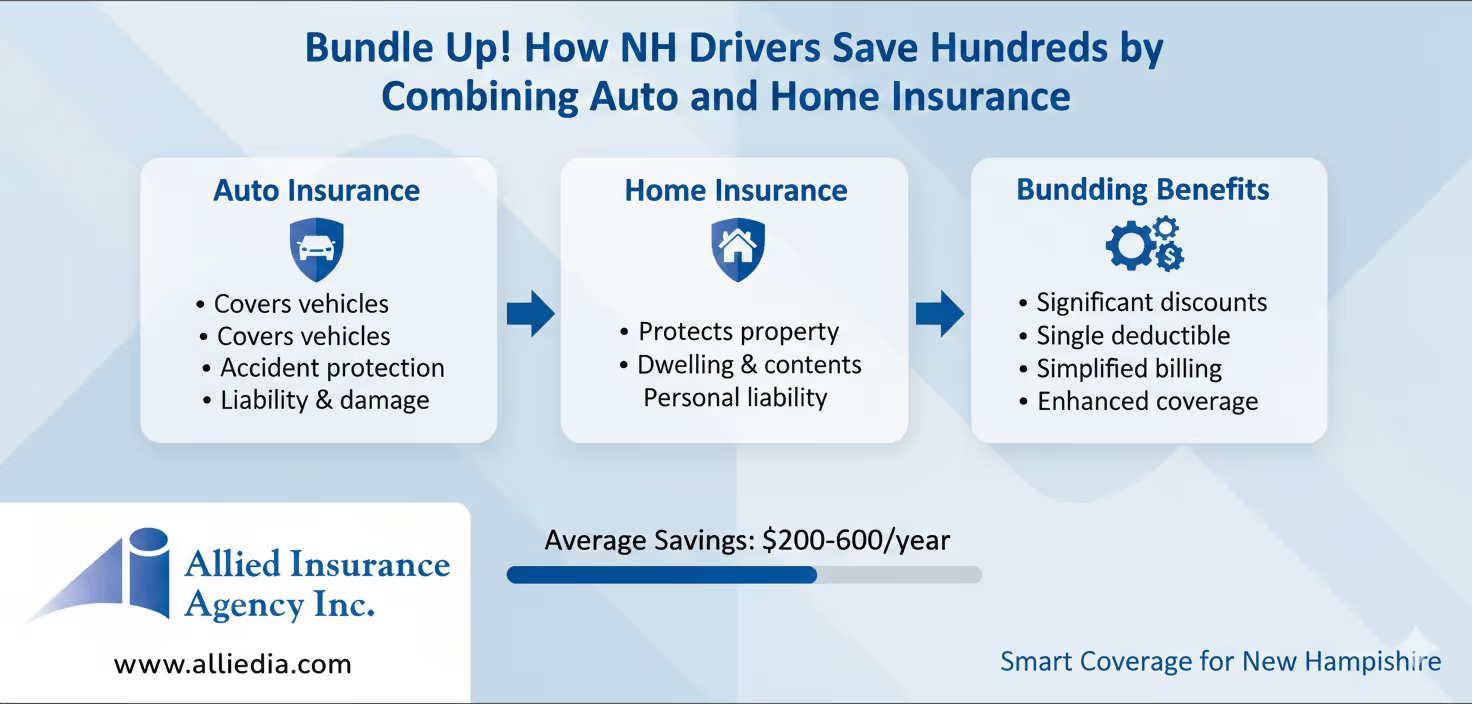
Bundle Up! How NH Drivers Save Hundreds by Combining Auto and Home Insurance
Allied Insurance Agency presents a practical buyer's guide aimed at households across New Hampshire. The goal is clear: help people in Concord, Bow, Hooksett, and nearby towns decide if combining vehicle and property policies will lower costs while keeping strong protection.
The guide explains why the average combined annual cost in the state sits near $1,515 and why smart comparison still matters to save money. Readers will learn how discounts work, what drives premiums, and when a packaged policy can fail to deliver value.
The agency speaks from an independent perspective. It will show how to compare quotes, spot coverage gaps, and weigh winter weather, water loss risks, and at-fault driving realities in policy choices.
Key Takeaways
- Bundling may reduce bills, but real savings depend on base rates and discount rules.
- Allied Insurance Agency compares multiple options with a coverage-first focus.
- Residents in Concord, Bow, and Hooksett often benefit from simpler billing and policy management.
- Watch for gaps: not all combined policies cover water damage or winter losses equally.
- Learn how to compare quotes so cost cuts do not reduce long-term protection.
- State averages show savings potential, yet local comparison yields the best outcome.
Why bundling matters for New Hampshire drivers and homeowners right now
In New Hampshire, modest percentage cuts to both property and vehicle premiums can add up to real yearly savings. The state average combined cost sits near $1,515, about half the national average, yet small rate moves still matter.
Contact Allied Insurance Agency for a free auto insurance quote.
New Hampshire’s combined costs trend well below the national average
Even small rate changes translate into useful money when two policies are totaled. A 5% shift on each policy can reduce a household’s annual spend by meaningful dollars.
What “saving hundreds” can realistically mean
Outcomes vary by location and household profile. Commute length, number of vehicles, teen drivers, home age, and prior claims push rates differently in Concord, Bow, and Hooksett.
- Pricing pressure points: mileage, driver age, and property condition.
- Realistic savings: some customers see large reductions when both policies start competitively priced; others see modest change.
- Practical goal: determine total annual cost and coverage first, then weigh convenience and discount stacking.
Bottom line: bundling is a pricing tool layered on top of base rates. Accurate quotes and comparable coverages set the stage for any meaningful savings.
How bundling home auto insurance works and what discounts typically apply
Choosing to buy more than one policy from the same company creates an opportunity for lower total premiums. In plain terms, one household places both home and auto policies with the same insurer so a multi-policy discount applies based on that insurer's formula.
Why companies reward multi-policy customers
Insurers favor customers who keep multiple policies because retention improves. Higher retention lowers operating costs, which often translates into discounts for policyholders.
Typical discount behavior
- Discount ranges often sit in the mid-teens to low 20% range for eligible households.
- The percentage off a vehicle policy can differ from the percentage off a dwelling policy, so total savings depend on which premium is larger.
- Eligibility, underwriting, and property or vehicle traits change results.
Stacking discounts and agency help
Multi-policy savings may combine with other eligibility-based credits such as claims-free, safety features, paid-in-full, or responsible driver programs. An independent agency compares bundled and separate options so clients see the total cost, not just a headline rate.
Contact Allied Insurance Agency for a free auto insurance quote.
When an NH auto and home insurance bundle saves money and when it may not
Savings only appear when both base premiums are competitive, so a quick arithmetic test prevents surprises.
Core math is simple. Total premium equals the base price for a dwelling policy plus the base price for a vehicle policy minus any multi-policy discount. A packaged offer only wins if each base price is near market value.
Why a low-priced vehicle policy plus a higher-priced dwelling policy can erase savings
Households sometimes pick a cheap car plan, then move their property policy to the same company. If the new home premium jumps, the discount on the auto side may not cover the increase.
How to compare side-by-side quotes
- Match liability limits and bodily injury amounts.
- Match comprehensive and collision deductibles and loss-of-use terms.
- Compare dwelling limit methods, endorsements, and personal property rules.
Variables that change outcomes in New Hampshire
Underwriting factors matter: prior claims, credit-based measures where allowed, roof age, heating type, distance to fire protection, vehicle model, annual mileage, and driver history can shift results in Concord, Bow, or Hooksett.
Treat bundling as one option among several. Verify that a lower premium does not mean weaker coverage before deciding. Contact Allied Insurance Agency for a free auto insurance quote.
New Hampshire insurance basics that affect bundling decisions
State rules in New Hampshire shape how drivers and homeowners plan coverage and manage risk. The state generally does not require most drivers to carry car insurance, yet it enforces an at-fault system where a driver is financially responsible for damages after an accident.
Liability exposure can be significant. Even routine crashes may result in costly claims, so many households choose liability limits that exceed minimal expectations to protect assets.
Some drivers must file proof of financial responsibility after certain events. That requirement makes continuous coverage planning important to avoid administrative penalties and to maintain access to reasonable rates.
Why homeowners coverage often becomes effectively required
Homeowners insurance is not legally mandatory, but mortgage lenders normally require proof of coverage. Lenders protect their collateral, which means many residents must keep a policy in force while a loan exists.
- Escrow and billing changes can alter when premiums are paid and when renewals occur.
- When a lender mandates coverage, placing both policies with one company often simplifies management and billing.
- Smart bundling starts by matching legal obligations and a household’s risk tolerance before chasing savings.
In short: understanding New Hampshire obligations and liability risks helps households decide whether combining policies makes practical sense for their budget and assets.
Auto insurance coverage building blocks to review before you bundle
Before combining policies, the agency recommends a quick coverage checklist so savings do not come at the expense of protection.
Liability limits and practical risk
Liability pays for injuries and property damage the driver causes. In new hampshire the at-fault rule makes adequate limits essential to protect assets.
Uninsured and underinsured motorist
These coverages help when another driver cannot pay. They matter on busy routes and on winter roads where crashes rise.
Medical payments
Medical payments cover immediate injury costs that health plans may not. It is a short-term bridge while claims and medical bills settle.
Comprehensive, collision, and deductible strategy
Comprehensive covers theft, weather, and glass loss. Collision covers impact damage to the vehicle.
Choose a deductible that matches an emergency fund. Higher deductible lowers premium but raises out-of-pocket exposure.
Teen drivers and youthful operators
Adding a young driver often increases rates. A combined quote can soften the increase for some customers, yet coverage structure matters more than any discount.
- Review vehicles, annual mileage, and driver lists before asking for a combined quote.
- Confirm limits, deductibles, and coverages match across policies so the quote reflects real risk.
an image that conveys the concept of “Bundle Up! How NH Drivers Save Hundreds by Combining Auto and Home Insurance
Homeowners insurance coverage essentials for New Hampshire homes
A solid policy starts with dwelling coverage that reflects current rebuilding costs. New Hampshire roofs, framing, and labor prices can change fast after storms. Accurate limits help ensure repair checks reflect real replacement expenses.
Replacement cost versus actual cash value
Replacement cost pays to rebuild without deducting depreciation. Actual cash value subtracts wear from the payout. Choosing the wrong option can leave a homeowner with unexpected out-of-pocket repairs.
Personal property and off‑premises loss
Coverage protects belongings inside the dwelling and often extends to items kept away from the property. Valuables taken on trips or stored in vehicles may need scheduled coverage or higher limits.
Liability and guest medical protection
Liability covers legal costs if someone is injured on the premises. Guest medical pays small, immediate bills without a full liability claim. Both are vital for common incidents such as slips or dog-related injuries.
Loss of use and additional living expenses
If a covered claim makes the residence unlivable, loss of use helps pay temporary housing, meals, and related costs. Verify time limits and allowable expenses so recovery is smooth during repairs.
- Tip: confirm rebuilding estimates, off‑premises limits, liability caps, and loss-of-use wording before choosing a policy.
- When comparing options, a lower premium should not reduce these core protections for the property or household.
For a practical overview of regional rates and coverage comparisons, see this New Hampshire homeowners guide.
NH-specific risks and add-ons that can change the “best bundle” decision
Specific risks in New Hampshire reshape which policy add-ons are worth the extra cost. Buyers should weigh extra coverages when local hazards or lender demands raise exposure.
Flood coverage
Standard homeowners policies exclude flood losses. For houses near rivers or low land, separate flood coverage may be required by a lender or recommended by an advisor.
Tip: confirm flood maps and consider a stand alone flood option if a property is at risk.
Water backup and sewer endorsements
Older neighborhoods often face sewer backups or foundation seepage. A water backup endorsement is an affordable add-on that pays cleanup and repairs not covered by basic dwelling coverage.
Wind, snow, ice, and freeze risks
Heavy snow loads, ice dams, wind events, and freeze-related pipe bursts drive many local claims. Simple mitigation like roof rakes, insulated pipes, and gutter maintenance can help lower rates while improving underwriting outcomes.
Why location shifts premiums
Proximity to fire protection, local rebuilding costs, and road exposure change both property and vehicle quote components. In Concord, older housing stock may need sewer endorsements. In Bow, distance to fire services can affect premiums. Hooksett buyers often see impact from weather exposure and commute patterns.
- Choose options that reflect actual risk, not just the cheapest premium.
- Compare coverage for flood, water backup, and seasonal losses before deciding which packaged offer truly protects assets.
How to shop for the best insurance rates and coverage in New Hampshire
Start your search with clear data: accurate quotes come from complete household and property details. Gathering facts first speeds comparisons and helps customers in Concord, Bow, and Hooksett find best offers without gaps.
What to gather for accurate quotes
Collect these items before you call or click.
- Driver details and license history for every household operator.
- Vehicle list with VINs, annual mileage, and where each car is garaged.
- Prior claims and current proof of prior coverage.
- Home facts: year built, roof age, major updates, heating type, square footage, and distance to fire services.
- Desired dwelling valuation method and any recent repair estimates.
Keep comparisons apples-to-apples
Match liability limits, deductibles, endorsements, and valuation methods before comparing total rates. Look past single-line discounts and check for missing add-ons like water backup or replacement cost clauses.
Timing and avoiding gaps
Shop a few weeks before renewals and coordinate with escrow or mortgage changes. Confirm effective dates so coverage does not lapse during winter months when lapse-related losses rise.
Practical tip: compare total annual premium, service features, and claim support from different companies to truly find best options.
Contact Allied Insurance Agency for a free auto insurance quote.
Why working with an independent insurance agency improves bundle outcomes
An independent agency gives customers choice. Allied Insurance Agency shops multiple markets so clients in Concord, Bow, Hooksett, and across New Hampshire see offers from varied companies. That comparison avoids the limits of a single carrier and reveals real options for placing home auto coverages.
Independent shopping across multiple companies
Access to many companies means better match for risk, price, and underwriting rules. An independent auto and home insurance agent knows which markets favor certain property features or driver profiles.
Coverage-first guidance
The agency emphasizes coverage before discounts. They confirm liability limits, dwelling valuation, deductibles, and key endorsements so a lower price does not mean weaker protection.
Local support for policy changes and claims
Clients get hands-on help after moves, when adding a teen driver, or when a lender needs a mortgagee clause. The agency also issues certificates for contractors and assists with claims during severe weather or collisions.
- Better bundle outcomes: lower total premium when placements align, fewer gaps, and consistent limits across policies.
- Practical conveniences: one account, streamlined billing, and faster response from a local contact.
- Statewide presence: prompt service for households across new hampshire and local accountability in Concord, Bow, and Hooksett.
Conclusion
A clear comparison of matched coverages reveals whether a combined policy saves money or simply shifts costs. In new hampshire, packaged plans often reduce total annual spend and simplify billing, yet savings only hold when both car and property policies are competitively priced and correctly built.
Match limits, match deductibles, and confirm endorsements for local risks such as flooding, freeze, or sewer backup before comparing totals and service value. Remember that discount percentages can mislead; base premium size and uneven splits drive real savings.
Prioritize coverage first: liability levels, rebuilding assumptions, and winter-related endorsements must be right before chasing the lowest number. An independent local N.H insurance agency shops multiple markets and explains options for families with multiple cars, teen drivers, or older homes.
Contact Allied Insurance Agency for a free auto insurance quote.


